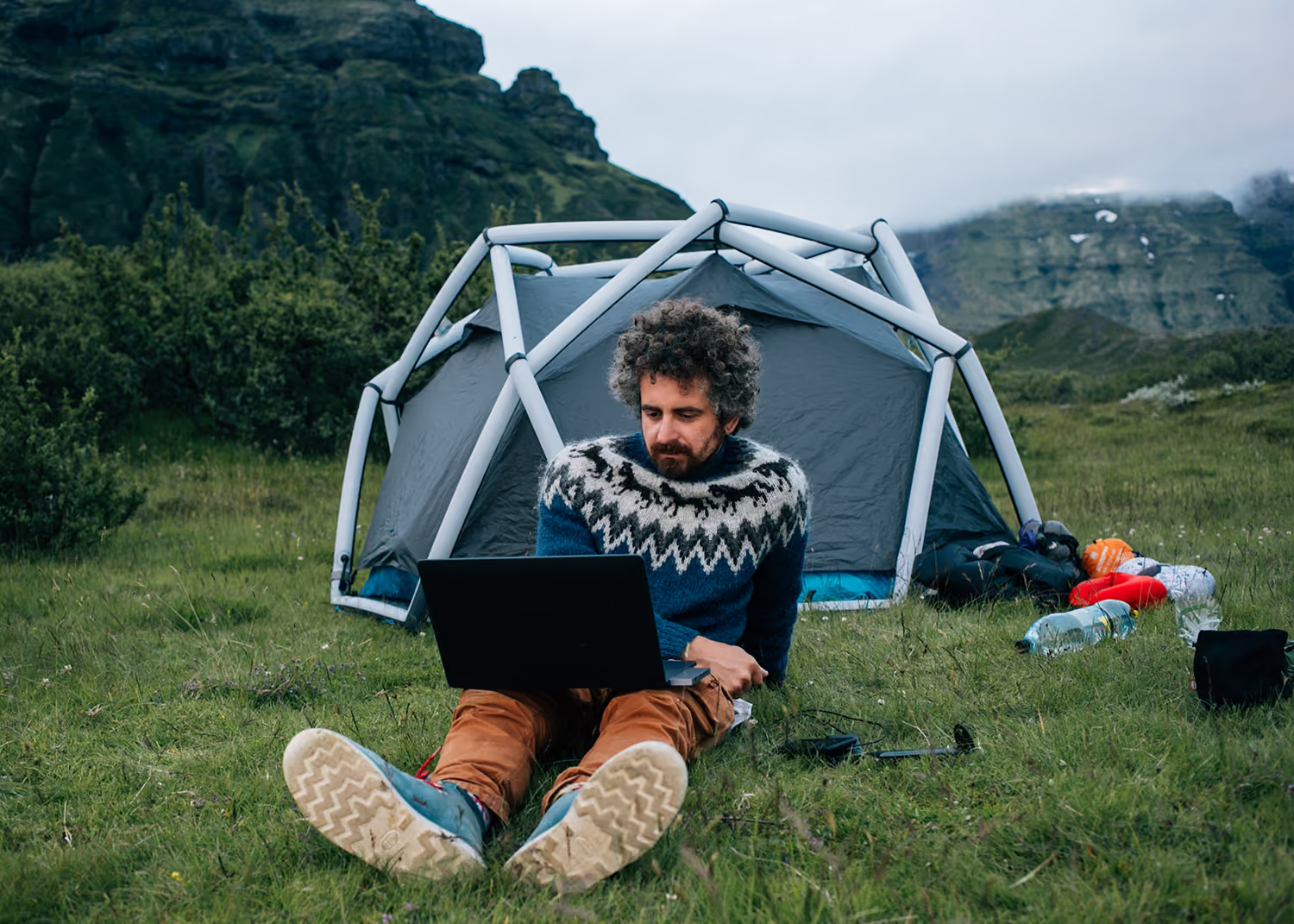

Online therapy is for anyone who wants real help but whose schedule, location, or life stage makes consistent in-person sessions genuinely difficult.
You may be a new parent with a toddler at home who can't easily step out for a 50-minute appointment. You may travel regularly for work and need a therapist who can be there no matter which city you're in. You may be a high achiever on the outside who is overcommitted and overwhelmed on the inside — and the idea of adding one more commute to your week is enough to make you put off getting help indefinitely.
What do you look like from the inside? You are surviving one day at a time, rarely slowing down. You feel disconnected from your community, from your family, and sometimes from yourself. You may feel burned out in ways you don't fully have words for yet.
What you really want is help that meets you where you are. You want to know you are not alone. You want care you can count on — not something you have to cancel every time your schedule explodes.


- Online Therapy for Burnout: Burnout often hits hardest the people who are least likely to slow down. Online therapy removes the barrier of adding one more commute to an already overloaded week and makes sustained treatment realistic for people running on empty.
- Online Therapy for Anxiety and Stress: Chronic stress and anxiety don't take days off — and neither should your access to support. Regular teletherapy sessions provide a consistent anchor point in a week that otherwise has very few.
- Online Therapy for Grief and Transitions: Loss, life changes, and disorientation don't require a waiting room. Online therapy allows you to process what's happening from wherever you are, with the same depth and care as in-office work.
- Online Therapy for Busy Parents: Whether you're navigating a newborn, a teenager, or the quiet crisis of feeling like a stranger in your own family — online therapy gives you access to real help without requiring you to arrange childcare or a commute.
Online therapy with me is not a lesser version of in-person work. The same frameworks I use in the office — Family Systems therapy, Attachment science, and Relational Psychodynamic therapy — translate fully to a virtual environment. The depth, the confidentiality, and the quality of the clinical work do not change because we are on a screen. What changes is the logistics — and in my experience, removing the commute and the scheduling friction actually makes it easier for some clients to show up consistently and do the work.


Clients who use online therapy with me often tell me they begin to:
- Finally maintain consistent treatment without sacrificing it every time life gets full
- Feel less alone, even when their schedule and location make connection difficult
- Address what they've been putting off because in-person logistics felt impossible
- Handle stress more effectively, with strategies that actually hold up in real life
- Feel more present at home and at work, not just surviving the day
- Have the quality of their care match the quality of the rest of their life
Sessions happen through SimplePractice's HIPAA-compliant platform. All you need is a stable wifi connection and a private space where you can speak freely. I recommend the same location every week if possible — consistency in your environment supports consistency in the work. Everything else is identical to in-person therapy. You bring what you're carrying. We work through it together.